|
|
|
NORTH AMERICAN PENUTIAN-MAYA PORTRAY SUPERNOVA 1054 By James R. Van Dyke MAYA PALEOLITHIC MUSEUM OF ART AND ARTIFACTS P.O. Box 2638, Redwood City, CA 94064-2638 E-mail: jvandyke@yahoo.com
FIGURE 1.1
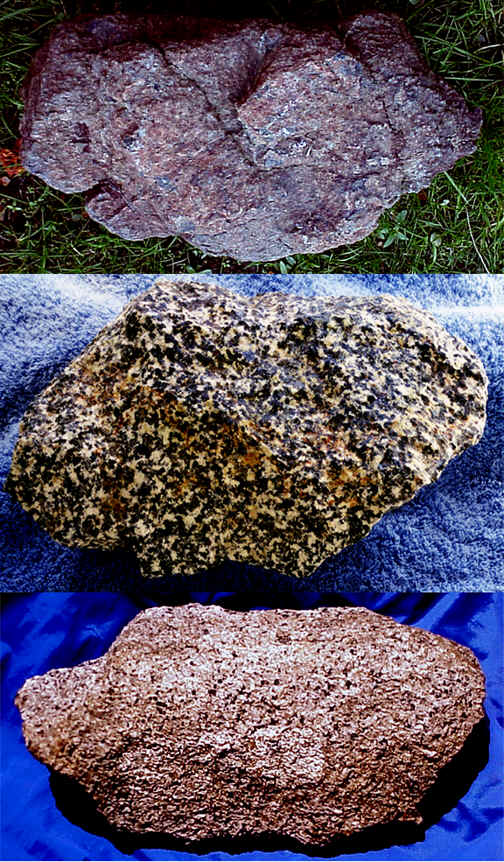
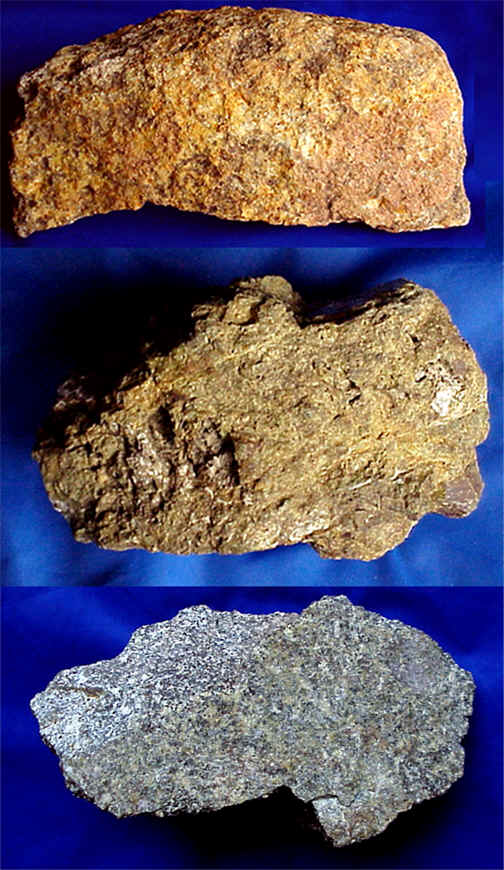
NORTH AMERICAN PENUTIAN-MAYA PORTRAY SUPERNOVA 1054 The sky has always captivated man and this man fell in love with the heavens and its ancient myths when I was about ten. Half a century later almost every thing else has changed, but the night sky still appears the same. A supernova is an explosion of the outer corona and an implosion of the inner core. The event creates a neutron star or for a star that is three times larger than our sun, a black hole. The Crab Nebula is above the three stars of Orion 's belt near the star Zet Tau in our constellation Taurus. The supernova that created the Crab Nebula in 1054 was recorded by Chinese and Japanese astronomers. The Maya were well known for their expertise in astronomy. If their civilization still flourished somewhere at the time of the supernova, then they also would have recorded the event in stone.For the Maya as for all others in the World, dawn on the morning of the 4th of July 1054 presented a blazing display in the eastern sky. Their cosmic monster (a portion of the Milky Way) was perpendicular to the eastern horizon and at the upper end in the monster's mouth was a waning crescent moon. To the North of the passengers of the crocodile sky canoe were the rising sun, the planet Mars, the planet Mercury, the supernova and the moon. The supernova was located above the star Zet Tau, to the observer's left of Sipakna's beak in the Maya constellation rampant eagle. By sunrise, the supernova was so bright that it remained visible during the day. For the next twenty-three days this guest star was viable in the daytime and nighttime sky. In this assemblage of stones, about ten percent of the artifacts portray the eastern sky on that morning in July 1054. On the evening of 5 December 1999, a cache was discovered that appeared to be the seasonal tools of a Neolithic wood worker. The cache was located between the roots of a large pine tree. The top stone is now a permanent part of the tree, the tree roots having grown around the edges of the stone. As the tree grew it brought the cache to the surface. I am now convinced that this cache is instead a time capsule commemorating the supernova that occurred during July 1054. The art form and representations of the night sky on the artifacts appear to be Maya. The images on these artifacts however, are weak and difficult to see. Just three weeks later and 700 miles to the south, I discovered what I believe to be an Itz At's workshop in Redwood City, California. What is significant about this site is that it contained artifacts similar to those in Oregon. The images and artifacts are of a higher quality. In general, this is true of all artifacts found in California. The three peccary in FIGURE 1.1. are pictured from the top to bottom as follows: 1. RWC#3CA-as07, In situ Garden stone, 30 cm approximate length. 2. RWC#1CA-as08, Green and white granite, 20 cm approximate length. 3. RWC#2CA-ca01, Black and white granite, 30 cm approximate length. The three artifacts are Homomorphic, both physically representing the same object, a peccary, and for having the same art carved into or painted on their surfaces. That art in this case is the crocodile sky canoe and dawn on the 4th of July 1054. The peccary is a small nocturnal pig like animal native to Mesoamerica, which is significant because it is, at times, the Maya constellation among the three stars of Orion's belt. At other times, it is the Maya constellation of the turtle, which is significant because it is the birth place of First Father, the Maya corn god. The classification system for the artifacts in the photographs in this paper and on the web site, http://www.mayapaleolithicmuseum.org, document the location of the discovery site for each artifact. The first three letters indicate the closest city to the site, next is the site number followed by the two letters for the state. The next two letters are the gallery, to which the artifact is first assigned and the artifact's number. It is hypothesized that the Penutian-Maya originated from Oregon and California, migrated into Mexico and Central America, then migrated back or continually maintained colonies in California, Maui in the Hawaii Islands, and Oregon. The artifacts provide evidence that the hypothesis has validity. Additionally, the evidence suggests that the Penutian-Maya continued to occupy parts of the Oregon and the California territories until the time of the west coast conquest. The colony on Maui ended at the time of the unification of the Hawaii Islands. There is also support for the hypothesis in the classification of languages of the Native First People of America and of the Maya. The artifacts in FIGURE 1.2. are all variations of a hand ax. These three artifacts also are Homomorphic, for having the same art, the crocodile sky canoe and dawn on the 4th of July 1054, carved into or painted on their surfaces.
FIGURE 1.2 |