
Dear Preservers of Maya heritage,
In the classification of the Maya languages and the Native First People of America, one
finds a common root language along the pacific coast. It is hypothesized that
the Maya originated from Oregon and California, then migrated into Mexico and Mesoamerica,
and then migrated back again into North America. The physical evidence
presented at the web site http://www.mayapaleolithicmuseum.org/
suggests that the hypothesis has validity and additionally, that the Maya continued to
occupy the Oregon and California territories (their colonies) until the time of the west
coast conquest. Their colony on Maui ended at the time of the unification of the
Hawaii Islands. Stone working Maya left dated stone artifacts at these sites, with
some dating from the eleventh century. I used Archeoastronomy to determine my
time period and I am looking for help to read any dates on the artifacts. I am
writing to your group because I am looking for a home for the four collections that may be
viewed at: http://www.mayapaleolithicmuseum.org/toc.htm
, under new additions.
In the last 20 months, I have discovered six separate paleolithic sites and four
associated caches. What is most extraordinary about these discoveries is that, they
appear to be Maya! If one believes in the land bridge theory of the migration into
the Americas, then all tribes came down through the ice free corridors into Oregon and
Northern California. Although the existence of the Maya has been unknown in
North America, their civilization appears to be more extensive than previously believed
and their written history would extend from the classic period into modern times. In
North America, their disappearance would not be such a mystery. On the West
coast, almost 99% of THE NATIVE POPULATION died of foreign diseases by the end of the
nineteenth century. The artifacts displayed on our web site were discovered in the
Pacific North American states of California, Maui in the Hawaii Islands, and Oregon.
My first discovery was a stone lined box or cache near
Oregon City, Oregon, which contained about sixty items (Tools, statues, anthropomorphic
and zoomorphic sculptures and two sets of Quincunz Itz stones). Then just three weeks
later and 700 miles to the south, I discovered what I believe to be an Itz At's workshop. Next, a little
farther west I found a site that I saw in a repeating dream (three nights in a row) on the
island of Maui. About one year later I made a discovery of a cache in San Carlos, California on 8 October 2000. What was
nice about the San Carlos site was that it contained tools and artifacts similar to the
cache in Oregon. In February and March 2001, I found two more caches,
the first at Kaiser Hospital in Redwood City and two weeks later another in Oregon
City, http://www.mayapaleolithicmuseum.org/NA-March-April.htm.
Then I decided to look for one specific artifact, the turtle,
http://www.mayapaleolithicmuseum.org/Turtles.htm
, in order to put together a collection of them. Finally, while looking
for turtles, I also looked for jasper artifacts in order to put together a collection that
would be visually appealing, http://www.mayapaleolithicmuseum.org/Jasper%20collection.htm
.
With a four power magnifying lens, you will see many glyphs carved into
the artifact's surfaces in addition to the images on the objects. After looking
around the museum you will see that I am comparing many similar artifacts from different
sites. I believe the artifacts cry out that their identity is Maya. I am
looking for a co-author, who is a world recognized Maya expert to help prepare an article
on these discoveries. Additionally, an astronomer who is interested in the Maya and
their recording of the supernova of 1054, would be very
helpful, any suggestions? The reason for this request is I believe that most of the
artifacts date from the eleventh century and portray the morning sky on July 4,
1054! I now have well over fifteen hundred artifacts, please see the samples
below. I wish to put together a representative collection of these artifacts that
will be donated to museums in each country that have a Maya heritage. Thanks
for your time.
Respectfully,
James R. Van Dyke
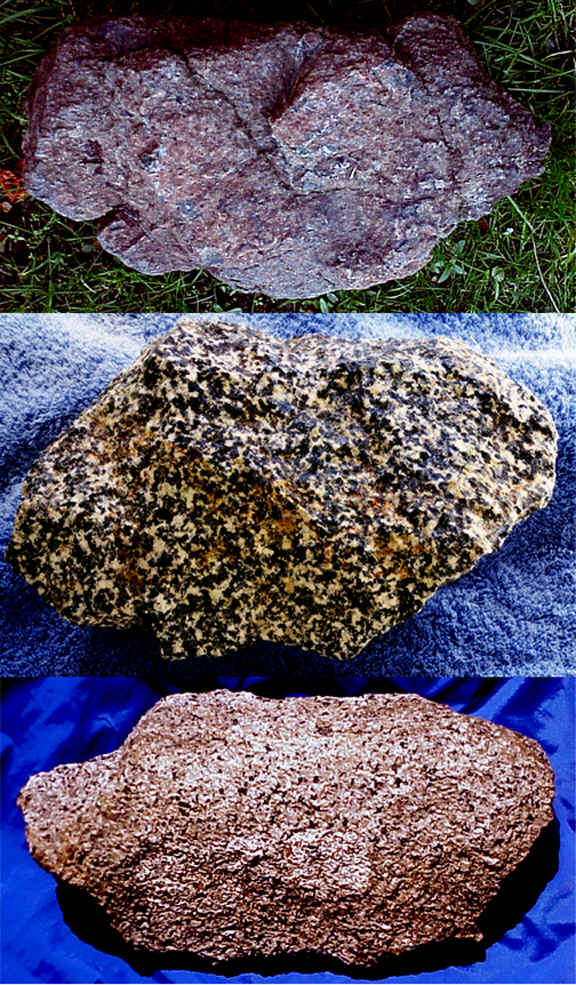
P.S. The three artifacts below are Homomorphic, both physically
representing the same object and for having the same art carved into or painted on their
surfaces.
1. Garden stone in situ, Site#3, approximately 30 cm longest length.
2. Green and white granite, Site#1, approximately 20 cm longest length.
3. Black and white granite, Site#2. approximately 30 cm longest length.
Three Peccary circa 1054
Sunrise 1054 in the cosmic
monster/crocodile sky canoe
three peccary - RWC#3CA-as07,
RWC#1CA-as08, RWC#2CA-ca01
TABLE OF CONTENTS